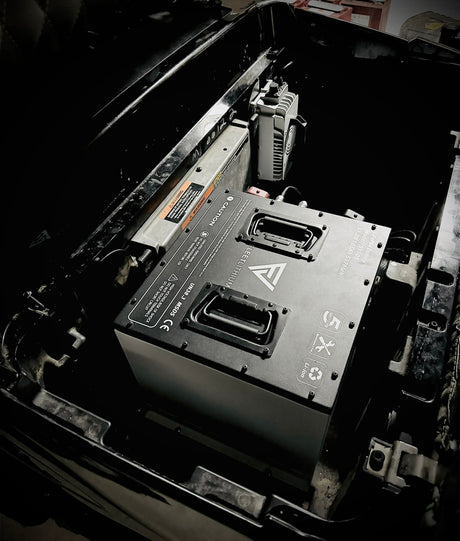
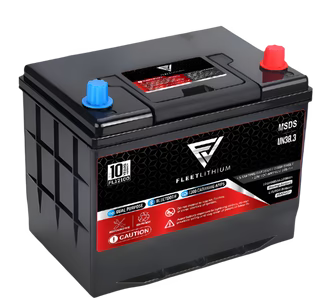
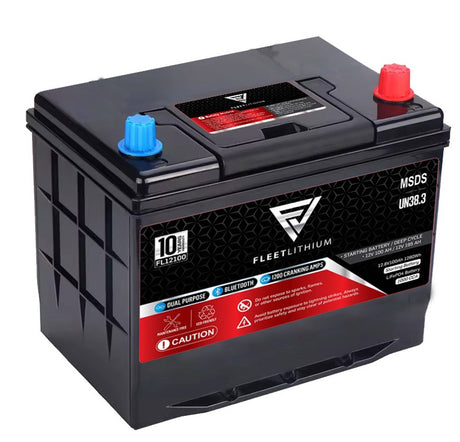
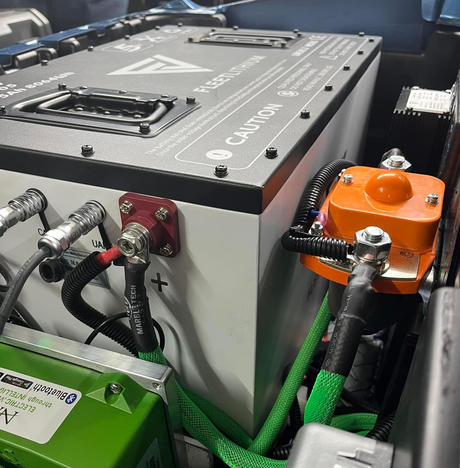
Can you convert a 48V Bad Boy Buggy to lithium?
Yes. A compatible factory 48V lead-acid Bad Boy can be converted using Fleet Lithium’s 51.2V LiFePO4 system, matched charger, mounting kit and correctly connected 12V supply. Choose 105Ah, 168Ah or a paired 210Ah configuration. Confirm your model and wiring first: the Classic’s original bank is eight 6V batteries, and its control circuits deserve attention before those batteries come out.
A good lithium conversion starts before you loosen the first cable. You need to know what powers the drive system, what feeds the lights and controls, and where the new battery will be secured. This guide explains those decisions so you can choose the right Fleet kit and prepare your buggy for dependable everyday use.
Start with the exact Bad Boy model and battery bank
This guide covers the Fleet 48V bundle listed for Classic, Buggy and XD vehicles. “Bad Boy” is not a voltage specification. Check the vehicle identification label, controller labels and original battery configuration. Do not apply this procedure to a 72V Recoil, a 72V Prowler or a hybrid system.
The original Classic specification lists eight 6V batteries connected in series. Some layouts place batteries forward of the main under-seat bay. Count the whole bank and photograph every connection before removal.

Send Fleet your model/serial label, controller labels, current battery photos and intended accessories if you need a fitment check. Resolve applicable vehicle recalls before driving; certain Classic vehicles are covered by an unexpected-acceleration recall. Installing a new battery does not complete a vehicle recall.
Why upgrade your Bad Boy to Fleet Lithium?
- Leave watering behind. LiFePO4 batteries do not require electrolyte top-ups or lead-acid equalization charging.
- Choose useful energy capacity. Match your battery reserve to the distance, terrain, load and charging opportunities in your day.
- See your battery status. The digital SOC display and supported Bluetooth monitoring give you more information than an old lead-acid voltage gauge.
- Buy a matched system. Fleet brings the battery configuration, lithium charger, listed mounting parts and 12V reducer together in one vehicle bundle.
- Get support for the conversion. Keep your order details, component labels and installation photos ready when you contact Fleet Lithium.
Routine ownership becomes simpler, but secure mounting, cable inspection and correct charging still matter. Review the current Fleet warranty terms when comparing your options.
105Ah, 168Ah or 210Ah: which battery should you choose?
All three options use 51.2V nominal lithium power. Capacity changes the energy you carry. The 210Ah kit uses two matched 105Ah packs in parallel.
| Capacity | Configuration | Nominal energy | Choose it for |
|---|---|---|---|
| 105Ah | One pack | 5.38 kWh | Regular use with opportunities to recharge between outings. |
| 168Ah | One pack | 8.60 kWh | More reserve in a single-pack configuration. |
| 210Ah | Two matched 105Ah packs | 10.75 kWh | The greatest capacity in this bundle, using the approved paired installation. |
Nominal energy = 51.2V × amp-hours ÷ 1,000. Stored energy is not a guaranteed driving range or usable-energy figure.
The 168Ah option carries 60% more nominal energy than 105Ah; 210Ah carries twice as much. Hills, mud, tire pressure, passengers, cargo, temperature and accessory loads change the energy needed per mile. Plan a reserve for the return trip instead of selecting a pack around an ideal maximum-range claim.
What is included in the conversion kit?
The current Fleet Bad Boy 48V bundle lists:
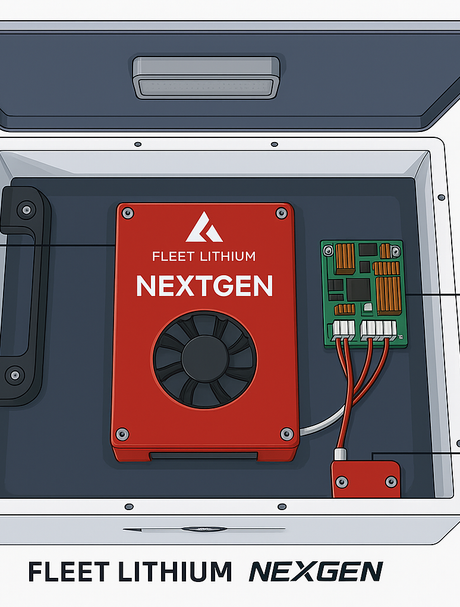
- Your selected 51V NexGen LiFePO4 battery configuration.
- CH5618 lithium charger: 58.4V DC, 18A output.
- BR5204 Bad Boy 48V mounting kit and hardware.
- AC0219 AC inlet and CB0917 main cable set, listed at 35.4 inches (about 900 mm).
- VR4812 voltage reducer for confirmed 12V circuits.
- Digital state-of-charge display.
Match the delivered parts and instructions to your vehicle before dismantling it. Confirm cable reach, terminal torque, mounting details and any required control interface. The 210Ah arrangement needs the approved parallel harness, protection and pack-matching procedure.
How to plan your Bad Boy 48V lithium installation
Use the downloadable manual with the instructions supplied for your vehicle, battery and mounting kit. The sequence below explains the job; the exact hardware and circuit connections depend on your buggy.
1. Photograph, label and isolate the original system
Park on level ground, set the brake, chock the wheels and disconnect external charging power. Photograph the complete bank and label main cables, charger leads, control wires, accessory taps and winch supplies. Follow the vehicle’s isolation and discharge procedure; key OFF alone is not electrical isolation. Each removed lead-acid battery remains a live energy source.
2. Remove the lead-acid bank and prepare the tray
Use suitable lifting equipment and terminal protection. Keep batteries upright and arrange proper recycling. Inspect the empty support structure for corrosion, damage and sharp edges before installing the new restraint.
3. Secure the battery and connect the approved power circuits
Trial fit the battery, check moving-part clearance and install the delivered mounting hardware using its specified torque. Route cables without strain, protect panel crossings and cover terminals. Preserve the original circuit protection and both drive branches on a dual-motor buggy. Do not drill or modify the battery case.
4. Finish the 12V, charger and display connections
Resolve the old battery taps before connecting them to the lithium system. Fit the matched charger and inlet, preserve the approved charge-inhibit arrangement and connect the SOC display to its intended battery port. Similar-looking plugs do not establish compatibility.
5. Commission the system before normal use
Verify polarity, restraint, torque, covers and cable routing before restoring power in the specified sequence. Check battery status, controller indications, 12V operation and charging. Complete a full charge, then a controlled low-speed drive and reinspection. On 210Ah systems, verify that both packs charge and contribute.
The detail that matters: accessories and old battery taps
Removing the lead-acid bank also removes any intermediate battery taps. A wire that used a particular post on the old series string does not automatically belong on lithium positive or negative.
The included VR4812 supplies confirmed 12V loads through the correct protected circuit. Identify its input, output, enable arrangement and current limits. Treat key, contactor and direction-control circuits separately: verify their required voltage and return using the exact vehicle/controller schematic. A shared-positive or offset-return arrangement needs the appropriate conversion interface.
A winch may draw more current than an accessory reducer can supply. Check its voltage and current demand separately. Have a qualified EV service provider resolve unidentified circuits; do not use wire color alone, join unknown returns or bypass a contactor to make the buggy move.
Keep the guide with your vehicle
Download the Bad Boy Buggies 48V installation manual
The illustrated manual includes real lead-acid reference photos, clear system diagrams, kit checks, installation steps, first-use testing, troubleshooting and a fillable installation record.
Revision 1.0 • 10 pages • PDF, 1.4 MB. Covers 105Ah, 168Ah and matched dual-pack 210Ah systems.
Charging and caring for your converted buggy
Use the supplied lithium charger and verify the AC supply requirements on its label. Do not use lead-acid equalization or desulfation modes. For a planning estimate at 18A, divide capacity by 18: about 5.8 hours for 105Ah, 9.3 hours for 168Ah and 11.7 hours for the complete 210Ah system from empty. Tapering, balancing, heating and other loads can extend the time; follow the charger’s completion indication.
Current heated NexGen packs manage heating during cold charging conditions; heating is not a driving function. Follow the battery’s temperature limits and leave BMS protections enabled. Inspect restraints, cables and terminals regularly and follow the current Fleet user manual for storage and routine care.
Bad Boy Buggy lithium conversion FAQs
Can a 48V Bad Boy Buggy be converted to lithium?
Yes, a compatible factory 48V lead-acid Bad Boy can use the Fleet 51.2V LiFePO4 conversion system. Confirm the model, controller arrangement, mounting and low-voltage circuits before choosing the kit. This guide does not cover 72V or hybrid systems.
How many batteries does a Bad Boy Classic have?
The original Classic specification lists eight 6V lead-acid batteries in series for 48V. Count the complete bank on your vehicle, including batteries outside the main under-seat compartment. Other Bad Boy models can have different layouts.
Why is the replacement battery labeled 51V instead of 48V?
Fleet uses 51V as the product name for a 51.2V nominal LiFePO4 battery. It is the lithium configuration offered for this compatible 48V vehicle class. Nominal voltage alone does not establish vehicle compatibility.
Can I reuse the original lead-acid charger?
Use the matched CH5618 58.4V, 18A lithium charger. Do not use the original lead-acid charger on the Fleet lithium pack. Preserve any vehicle charging interlock with the approved interface.
Will my lights and winch still work?
Confirmed 12V accessories use the correctly wired and protected 12V supply. Check a winch separately: its starting and operating current may exceed an accessory reducer. Existing control wires also need their correct voltage and return; they are not automatically accessory wires.
Is the 210Ah system one battery?
No. The 210Ah option uses two matched 51.2V 105Ah packs in parallel. Total capacity is 210Ah and nominal voltage stays 51.2V. Use the approved parallel harness and matching procedure, never a series connection.
How long does installation take?
There is no dependable universal installation time. Battery removal, tray condition, mounting, legacy control wiring, charging interfaces and testing all affect the job. Identify the complete system before scheduling the work.
Will a larger battery make my buggy faster?
More amp-hours provide more nominal stored energy. They do not establish a higher top speed or increase the original vehicle load and towing ratings.
Build your conversion around how you use your buggy
Choose the capacity for your property, workload and charging routine. Start with the Fleet Bad Boy 48V kit, use the illustrated manual to prepare, and confirm fitment before installation.